Crash Engine Tips for Better Soft-Body Wrecks
Filming, recovery, and session habits that turn random smashes into readable crashes.
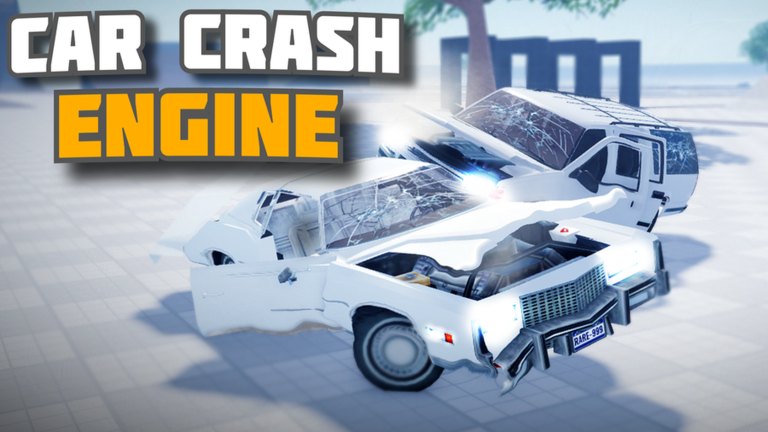
Soft-body sandboxes reward players who treat every hit like a short film take. This Tips and Tricks guide collects practical habits for Car Crash Engine on Roblox: how to stage crumple that reads on camera, how to recover without rage-resetting every three seconds, and how to structure a session so you leave with better wrecks than you started with. It builds on Crash Physics and Controls rather than replacing them.
Car Crash Engine by INGameWorks Studio is a free Simulation / Vehicle Sim experience (ages 16+, up to 25 players) inspired by BeamNG-style deformation. The fantasy is wide—ramps, walls, mountains, trains, derby, highways, roleplay—so tips that work everywhere beat map-specific memes.
Tip 1: Aim the crumple, not the speedometer
Raw speed is easy. Readable deformation is not. Before you pin throttle:
- Pick the contact face (nose, corner, door, rear).
- Pick the angle (square, glance, T-bone).
- Pick the exit story (stay upright and limp away, roll for comedy, or become scenery).
If you cannot name those three before the run-up, you are gambling. Revisit angle tables on Crash Physics when hits feel noisy instead of cinematic.
Tip 2: Build a personal wall ladder
One familiar wall teaches more than ten random props. Mark a mental ladder:
- Crawl tap —confirm the contact point.
- Medium square —primary crumple without losing the frame.
- High-energy —only after medium hits stay aimed.
- Glancing variant —same wall, 20–30° entry for sliding folds.
Log which rung still leaves your current car from Best Cars drivable. That number decides whether tonight is spectacle night or durability night.
Tip 3: Camera before throttle
Soft-body payoff is visual. Bad camera habits erase good physics.
- Recenter after every respawn.
- Switch to side or three-quarter view for wall smashes.
- Use a slightly elevated chase for derby pileups.
- Keep the impact zone in frame during the last two seconds of run-up.
- Agree a shared focal prop when filming with friends (Friend Sessions).
If the crumple happens off-screen, the take failed even if the mesh folded perfectly.
Tip 4: Recovery beats rage resets
Not every wreck needs an instant respawn.
- Drive 50–100 meters after a medium hit to learn post-crash steering.
- Only reset when the car is a sculpture or you are blocking a shared ramp.
- Straighten wheels before hard braking after a spin.
- Use short handbrake taps to pivot out of awkward rests instead of full-lock panic.
Recovery literacy makes mountain descents and Demolition Derby less frustrating because you stop treating every fold as a total loss.
Tip 5: Match car personality to the tip you are practicing
| Practice goal | Prefer |
|---|---|
| Filmed flips and panel drama | Compact / sports coupe |
| Learning new lines | Sedan / GT comfort |
| Mountain compression | Crossover / light truck |
| Derby survival | Mid-weight durable or light truck |
| Momentum / shove experiments | Heavy work body |
Type advice lives on Vehicles; letter ranks on Best Cars. Swapping cars mid-drill before you learned one chassis wastes the session.
Tip 6: Session structure (40 minutes)
- 5 min —controls warm-up: brake markers and one handbrake box (Controls).
- 10 min —wall ladder on one car.
- 10 min —one map focus from Maps and Modes (ramp, highway, or mountain approach).
- 10 min —social finish: derby pad or friend filming block.
- 5 min —optional chaos send only after clean reps are banked.
Saving cliff cartwheels for the end protects your practice quality. Check Updates if handling suddenly feels wrong mid-week.
Tip 7: Filming roles when friends join
Soft-body games double as content tools. Assign roles:
- Driver —owns the line and the hit.
- Spotter —calls clear / abort on shared ramps.
- Camera car —holds three-quarter view without T-boning the take.
- Derby filler —adds pileup mass only after the hero take lands.
One clean take beats five overlapping wrecks. Etiquette details sit on Friend Sessions.
Tip 8: Know when to leave the pad
Leave a demolition pad or busy ramp when:
- You are practicing precision and the pad is full scrum.
- Your car can no longer steer enough for a fair entry.
- Someone is clearly filming a staged line you keep interrupting.
- You feel tilt and start full-throttle charging without an angle plan.
Walking away is a skill. Rejoin after a highway cool-down lap.
Tip 9: Train and mountain honesty
Train-stop fantasies and mountain descents are momentum puzzles, not fair fights. Line up early, prefer heavier bodies for shove experiments, and measure success by crumple quality—not by literally parking rolling stock. Scout descents in a forgiving crossover before committing a glass coupe. Full setup notes remain on Crash Physics.
Tip 10: Ignore injector myths
You do not need scripts for better wrecks. Physics literacy, camera habits, and car choice outperform injectors—and unauthorized tools risk the account. The Scripts Hub exists as a safety overview, not a shopping list. Codes remain unverified as active; see the Codes Hub for status instead of chat pastes.
Quick reference checklist
- Named contact face, angle, and exit story before throttle
- Camera recentered and impact in frame
- Wall ladder completed on tonight’s main car
- Map focus chosen from Maps and Modes
- Recovery attempted before rage reset
- Friend filming roles assigned if in a group
- Derby pad left when tilt or blocking starts
- Updates Hub checked after any weird handling shift
Related pages
Deepen crumple theory on Crash Physics, tighten inputs on Controls, plan locations with Maps and Modes, survive pads via Demolition Derby, pick bodies on Best Cars, coordinate groups on Friend Sessions, and watch patches on Updates.
Aim first, smash second, recover third—then film the fold.
Frequently Asked Questions
Quick answers about codes, cars, controls, and soft-body crashes.
What is the fastest way to make crashes look better on camera?
Name the contact face and angle before you accelerate, then switch to a side or three-quarter camera so the crumple stays in frame.
Should I reset immediately after every wreck?
No. Drive a short distance after medium hits to learn post-crash steering. Reset when the car is undrivable or you are blocking a shared space.
How should I structure a practice session?
Warm up controls, run a wall ladder, pick one map focus, then finish with derby or friend filming—save pure chaos sends for the end.
Do tips replace the Crash Physics guide?
No. Tips are session habits. Crash Physics explains crumple, angles, descents, and train setups in more depth.